Home · Services · Lighting & Ceiling Fan Installation
Lighting & Ceiling Fan Installation in Campbell, CA
Quick answer
Fixture and fan work in low ceilinged ranch rooms, box rating and circuit capacity checked before anything pretty is hung.
Lighting work follows the ranch plan: low ceilings, early boxes never rated for a fan's movement, and kitchens remodeled around lighting designed for another era. The check before the fixture is box rating, circuit capacity, and switching that matches how the room is lived in. Downtown's older commercial conversions and the Pruneyard area homes add their own layer, mixed era wiring behind every wall plate.
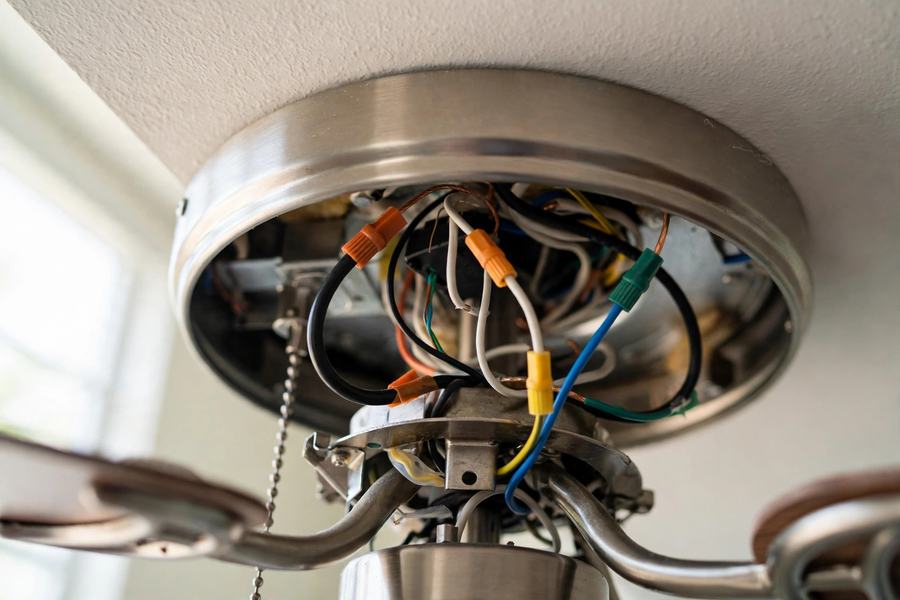
Signs you need lighting & ceiling fan installation
- A fan that wobbles, hums, or hangs from a box never meant to hold it
- Rooms lit by one tired ceiling fixture and a plan for recessed lighting
- Exterior lighting for a dark entry, dock, or lanai
- Fixtures flickering on a circuit that tests sound (a fixture fault, not a wiring fault)
- A chandelier or high ceiling fixture beyond ladder and comfort
What the job involves
What affects the price
- Fixture count and ceiling height and access
- Whether new switching or only fixture swaps are in scope
- Fan rated box installation where the existing box is not rated
- Exterior runs and any trenching or conduit for landscape and dock lighting
When it is an emergency
Lighting is scheduled work, except where the fault is the circuit rather than the fixture: flicker across multiple fixtures, heat at a switch, or a breaker involved moves the job to the repair pages. A fan that drops its speed settings or reverses randomly is usually a control or receiver fault, a part level fix, not a new fan.
PLACEHOLDERLighting & Ceiling Fan Installation across the Campbell area
Related services
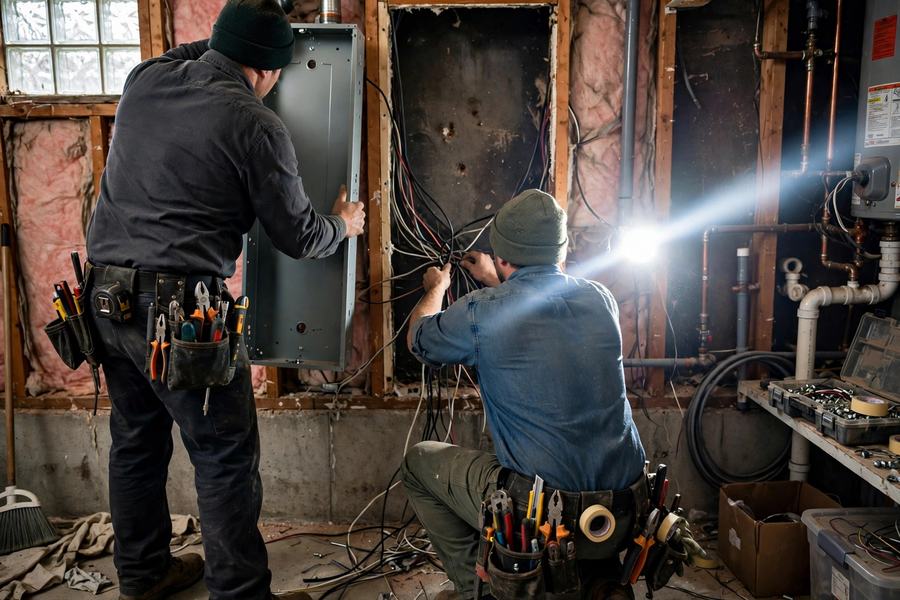
Breaker Panel Replacement & Upgrades
Panel and service upgrades for 60 to 100 amp ranch services, scoped from a written load calculation with permit and utility steps named.
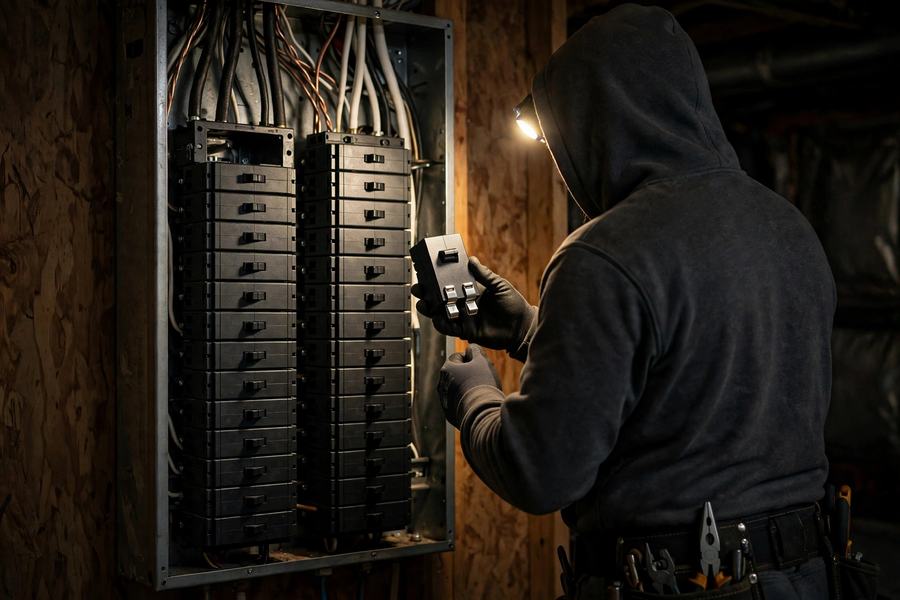
Emergency Electrical Repair
Same day triage that separates a PG&E street outage from a house fault, read against ranch era panels that fail by heating first.
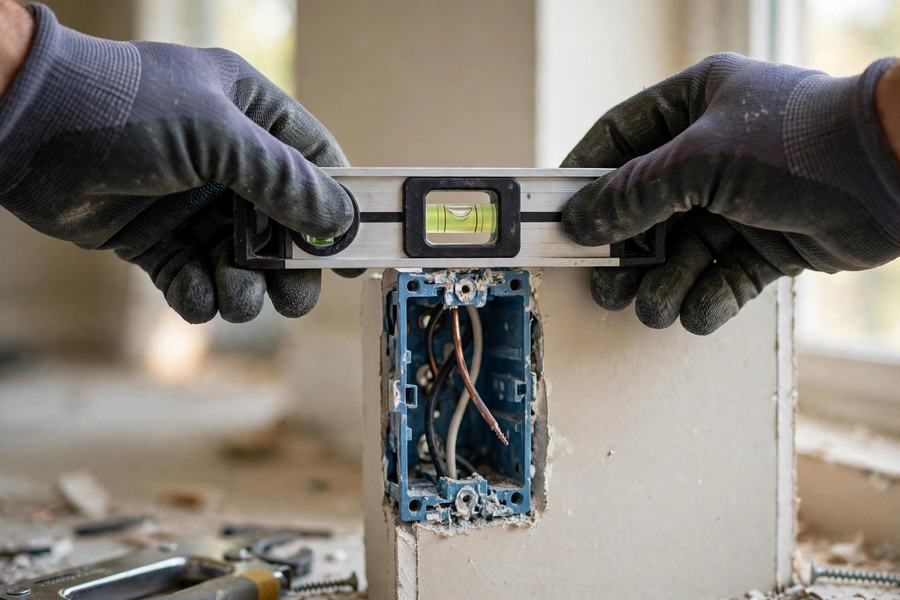
Outlet, Switch & GFCI Repair
Two prong outlet remedies with the honest three options, and ground fault protection verified by tester in kitchens, baths, and garages.
Wiring & Rewiring
Ranch house rewiring and aluminum branch remediation, scopes that name the access plan room by room because access prices the job.
Lighting & Ceiling Fan Installation questions, answered
When is lighting & ceiling fan installation an emergency?
Lighting is scheduled work, except where the fault is the circuit rather than the fixture: flicker across multiple fixtures, heat at a switch, or a breaker involved moves the job to the repair pages. A fan that drops its speed settings or reverses randomly is usually a control or receiver fault, a part level fix, not a new fan.
What affects the price of lighting & ceiling fan installation in Campbell?
The main price factors for lighting & ceiling fan installation are covered in the cost section above. The contractor confirms the exact price in a written estimate after seeing the job, and nothing is owed until you approve it. The call and the referral are free.
My insurer is asking about my electrical panel. What are they worried about?
Certain panel makes from the ranch building decades have documented failure histories, breakers that do not trip when they should, and insurers price or decline that risk when a questionnaire or a home inspection surfaces one. Campbell's 1950s and 1960s stock holds many of them. The answer is not to argue with the form: it is a panel evaluation in writing, and where the panel is one of the flagged makes, a replacement scope with the load calculation, the permit, and the utility scheduling shown. That document satisfies insurers and, not incidentally, removes the actual risk.
Can a 100 amp service run an EV charger and everything else?
Sometimes, and the load calculation is the only honest way to know. A 100 amp ranch service already carrying an electric range, a dryer, and air conditioning may have no honest room for a 50 amp charger circuit at full rate, while a gas appliance house may carry it easily, and managed or lower rate charging changes the math again. What does not change it is enthusiasm. Get the calculation in writing; if the panel job comes first, the same document prices it, and the charger lands on a service that can hold it.
How much does an electrician cost in Campbell?
Published national guides put electricians commonly at $50 to $100 or more per hour plus a service or trip fee, with small jobs (a device replaced, a fault traced) often landing between $150 and $400 all in. By the project: breaker panel replacement commonly runs $1,300 to $3,000, a generator interlock or transfer switch hookup $500 to $1,500, whole home surge protection a few hundred dollars installed, and whole home standby generators $10,000 to $15,000 or more installed. Written pricing after the assessment, with permit costs stated, is the number to compare.
Request a callback
Prefer to talk later? Leave your details and an independent local pro will call you back. No charge to you, no obligation.
Los Gatos Creek Electric is a free referral service. Submitting this form connects you with independent local contractors who provide the work.